
The sacred history of Maa Ashapura is inextricably woven into the spiritual fabric, cultural identity, and royal lineage of Kutch and Gujarat. As the divine mother who fulfills the heartfelt desires of her devotees, Maa Ashapura stands as the primary deity (Kuldevi) for the Jadeja Rajput dynasty, as well as several prominent communities across Western India including the Chauhans, Devdas, Kshatriyas, and local Kutchi clans.
Her main seat of worship at Mata No Madh (frequently searched by pilgrims as matanamadh, mata na madh, matanomadh, or mata no madh) serves as an enduring sanctuary of faith, historical resilience, and deep divine miracles. For devotees and cultural researchers exploring this sacred heritage in 2026, understanding the origin of the shrine, the miraculous manifestations of the Goddess, and her historical ties to the rulers of Kutch reveals the profound spiritual foundation of the region. At [matanamadh.in], our objective is to present a complete, authoritative repository of scriptural origins, historical records, and ritual practices associated with Maa Ashapura.
Whether you are seeking ancestral insights into your Kuldevi heritage, planning a pilgrimage to the holy temple, or studying the royal history of Kutch, this comprehensive article offers historical context, divine lore, and practical visit details.

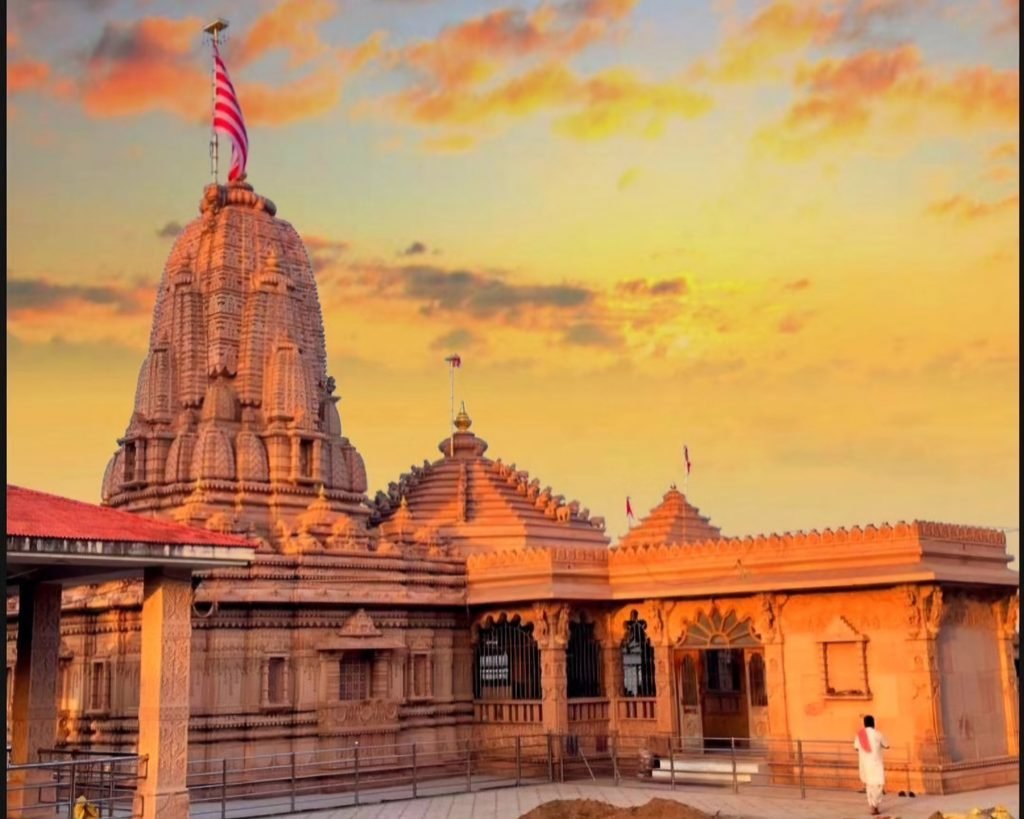
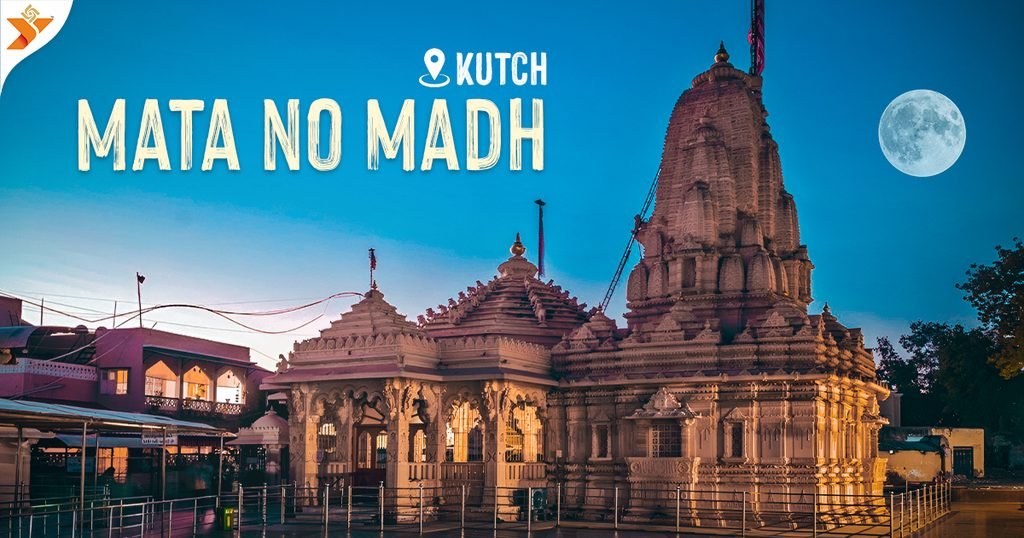
Table of Contents
Quick Navigation Index
- Theological Origins & Etymology of Maa Ashapura
- The Miraculous Manifestation at Mata No Madh: Divine Origins
- The Jadeja Dynasty & Divine Royal Patronage
- Architectural History & Reconstruction of the Shrine
- Sacred Miracles of Ashapura Mata: Ancient Lore & Modern Accounts
Section 1: Theological Origins & History of Maa Ashapura
The divine identity of Maa Ashapura represents a manifestation of the Supreme Cosmic Power (Shakti). Her name literally translates to “She who fulfills hopes and desires” (Asha meaning hope/desire, and Pura meaning fulfiller).
Scriptural Foundations in Shakta Traditions
In Shakta literature and regional Puranic traditions, Maa Ashapura is revered as an incarnation of Goddess Annapurna, Mahakali, Mahalakshmi, and Mahasaraswati combined into a protective, maternal form. Unlike wrathful manifestations of Shakti, Maa Ashapura is primarily worshipped as a benevolent mother deity who protects her children from calamity, secures kingdoms, and restores prosperity.
Unique Iconography of the Idol
The idol of Maa Ashapura at Mata No Madh possesses distinct iconographic features that differentiate it from conventional stone idols across India:
- Self-Manifested Image (Swayambhu): The primary deity image is not sculpted by human hands; it emerged naturally from the earth.
- Multiple Eyes: The idol is uniquely characterized by seven pairs of eyes (7 eyes on the main divine face structure), representing omnipresence and vigilance over the seven realms.
- Red Vermillion (Sindoor) Coating: The sacred idol is covered with layers of natural vermillion, giving it a luminous, radiant orange-red appearance.
- Divine Weapons & Gestures: The icon depicts posture holding traditional weapons of protection while simultaneously displaying the Abhaya Mudra (gesture of fearlessness).
Section 2: The Miraculous Manifestation at Mata No Madh: Divine Origins
The establishment of Mata No Madh as the principal seat of Ashapura Mata dates back over a thousand years to a pious merchant whose faith laid the groundwork for the sanctuary.
The Legend of Devchand Bania
According to long-standing oral and written historical records preserved in Kutch, a wealthy merchant from Karad named Devchand Bania was traveling through the region during an ancient trade expedition.
- The Dream Directive: Devchand, who was childless and prayed fervently for a lineage, slept at the current site of Mata No Madh. Goddess Ashapura appeared in his dream, directing him to build a temple at the spot where her divine presence rested underground.
- The Divine Condition: The Goddess instructed Devchand that after constructing the shrine walls, the sanctum doors must remain sealed for fourteen days while she manifested herself inside.
- The Premature Opening: Overcome by anxiety and curiosity on the thirteenth day, Devchand opened the sanctuary doors one day early. He discovered the divine image in the process of emerging from the earth. Because the doors were opened prematurely, the physical manifestation stopped in its partial form, which remains the exact posture worshipped at Mata No Madh today.
- Fulfillment of Hope: True to her name, the Goddess granted Devchand his wish for children and blessed the site to become a universal beacon for all who seek her grace.
Section 3: The Jadeja Dynasty & Divine Royal Patronage
The royal house of Kutch, led by the Jadeja Rajput lineage, considers Maa Ashapura their supreme protector and state deity (Kuldevi). The history of Kutch’s statehood is directly bound to the blessings of Mata No Madh.
The Divine Pact of Jam Unad and Jam Lakhiyar
The historical integration of Maa Ashapura into the Jadeja lineage began during the migration of the Sammis/Jadeja clans from Sindh into Western Kutch.
- Victory in Battle: Before establishing their capital at Lakhiyarviro and later Bhuj, early Jadeja chieftains prayed to Maa Ashapura for military strength against formidable local rivals.
- Establishment as Kuldevi: Following decisive victories attributed to divine intervention, the rulers formally declared Maa Ashapura as the official state deity of the Princely State of Kutch.
Royal Traditions & Navratri Rituals
Throughout centuries of monarchical rule, the Maharaos of Kutch personally conducted high-level rituals at Mata No Madh, a tradition that continues with symbolic royal participation in modern times.
| Royal Ritual / Ceremony | Occurrence | Historical & Religious Significance |
| Patotsav & Flag Hoisting | Ashvin Navratri | The Maharao of Kutch personally hoists the sacred flag (Dhwaja) atop the temple spire. |
| Patri Ceremony | Saptami (7th Night of Navratri) | The divine falling of flowers/leaves (Patri) from the deity’s right hand into the royal lap, signaling divine favor for the state. |
| Sacred Yagna (Havan) | Durgashtami (8th Night) | Offering of holy oblations in the central temple courtyard for regional peace and rainfall. |
For real-time festival dates, daily ritual schedules, and pilgrim guidelines, visitors frequently refer to [matanamadh.in].
Section 4: Architectural History & Reconstruction of the Shrine
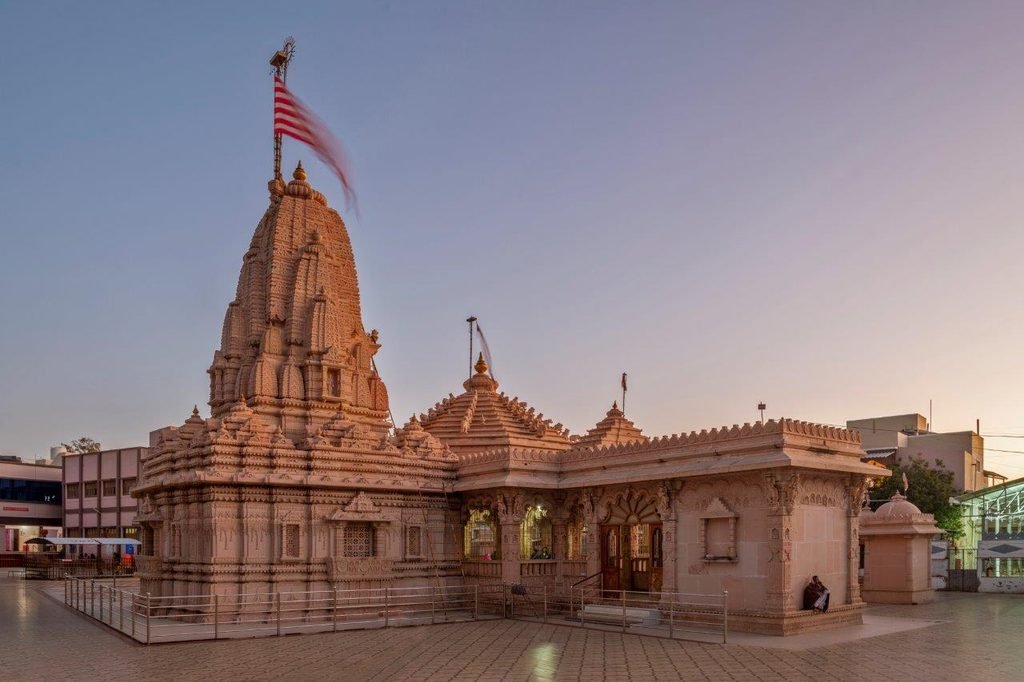
The main temple structure at Mata No Madh has weathered centuries of extreme climatic conditions and major seismic events in Kutch, standing today as an architectural marvel of modern stone craftsmanship.
Chronology of Temple Reconstruction
- 14th Century Foundation: The original temple structure was expanded under early regional chieftains, utilizing local yellow sandstone.
- 1819 Kutch Earthquake: A devastating earthquake caused major structural damage to the ancient dome and surrounding corridors.
- Reconstruction by Sundarji Shivji & Vallabhji (1823): Prominent Kutchi businessmen rebuilt the temple complex with reinforced stone masonry and grand pillared halls (Mandapas).
- 2001 Bhuj Earthquake: The severe 7.7 magnitude earthquake inflicted partial damage on the main spires.
- Modern Reconstruction (2002–Present): Under the stewardship of the Shree Ashapura Mata No Madh Trust and skilled artisans, the complex was rebuilt using earthquake-resistant traditional stone carving methodologies without structural steel, preserving ancient Vastu principles.
Section 5: Sacred Miracles of Ashapura Mata: Ancient Lore & Modern Accounts
The history of Mata No Madh is filled with accounts of divine interventions where Maa Ashapura protected her devotees and the realm of Kutch during times of crisis.
The Battle of Jhukhar (Protecting the Realm)
Historical chronicles record that when external armies invaded Western Kutch, the local defense forces were severely outnumbered. The army offered final prayers at Mata No Madh before engaging in battle. According to historical lore, a massive swarm of divine bees emerged from the temple surrounding walls and attacked the invading forces, throwing them into disarray and securing victory for Kutch.
The Miracle of the Unfailing Well (Meetha Kua)
In the arid, saline environment of Western Kutch, sweet drinking water was historically scarce. Legends state that during a severe drought, Maa Ashapura struck the ground near the temple perimeter, giving rise to a sweet-water spring that never runs dry, providing sustenance to millions of walking pilgrims (Padayatris) across generations.
Modern Accounts of Devotee Faith
Even in contemporary times, millions of devotees travel on foot across hundreds of kilometers from Bhuj, Ahmedabad, Surat, and Mumbai during Navratri. They recount stories of sudden healing, physical endurance through harsh terrain, and spiritual peace achieved upon entering the inner sanctum of Mata No Madh.
Section 6: Comprehensive Lineage & Sacred Geography of Ashapura Shrines Across Western India
While Mata No Madh in Kutch stands as the primary seat (Mool Peeth) of Maa Ashapura, the veneration of the Mother Goddess extends across multiple historical regions in Gujarat, Rajasthan, and Maharashtra. As Rajput clans migrated and established new kingdoms over the centuries, they carried sacred soil and divine flame (Jyot) from Mata No Madh to consecrate secondary seats of worship.
Regional Shrine Distribution & Lineage Hierarchy
| Region | Primary Shrine Location | Historical Lineage / Community Connection | Architectural & Pilgrimage Features |
| Kutch (Main Seat) | Mata No Madh | Mool Peeth for all devotees and Jadeja Rajputs | Swayambhu idol with seven pairs of eyes; ancient trust-managed complex |
| Kutch (Royal Capital) | Bhuj Palace Complex | Royal family seat of Maharaos of Kutch | Located near Hamirsar Lake; built for daily royal worship |
| Rajasthan (Pali District) | Nadol Ashapura Dham | Kuldevi for Shakambhari Chauhan Rajputs | 10th-century hill shrine built by Rao Lakha Chauhan |
| Rajasthan (Marwar Region) | Pokhran & Jalor Forts | Local Maheshwari, Brahmin, and Rajput clans | Ancient fort sanctums offering regional protection |
| Saurashtra (Gujarat) | Jasdan & Rajkot Shrines | Offshoot lineages of the Jadeja Dynasty | Preserves daily rituals brought directly from Mata No Madh |
| Urban Outposts | Mumbai, Surat & Pune | Kutchi diaspora communities across Western India | Modern community-supported pilgrimage centers |
Section 7: Daily Temple Schedule, Ritual Sequences & Darshan Rules (2026 Protocol)
Planning a visit to Mata No Madh (frequently accessed via information on [matanamadh.in]) requires strict adherence to the daily ceremonial timeline set by the temple trust.
Standard Daily Ritual Schedule
| Time Slot | Ceremony / Event | Pilgrim Access & Protocol |
| 05:00 AM | Temple Gate Opening (Kapat Ughadna) | Morning entry begins for early queuing pilgrims. |
| 06:00 AM – 06:30 AM | Mangla Aarti | First morning worship; high emotional and spiritual energy. |
| 06:30 AM – 12:00 PM | General Darshan & Offerings | Continuous queue movement for public darshan. |
| 12:00 PM – 01:30 PM | Rajbhog & Temple Closure | Shrine closed for divine offerings and priest prep. |
| 01:30 PM – 07:15 PM | Afternoon Darshan Hours | General access open for pilgrims and tour groups. |
| 07:15 PM – 07:45 PM | Sandhya Evening Aarti | Grand evening ceremony accompanied by drums and brass chimes. |
| 07:45 PM – 09:00 PM | Night Darshan | Final access period before daily temple closing. |
| 09:00 PM | Temple Closure (Kapat Bandh) | Gates close for overnight rest. |
Offering Protocol & Permitted Materials
Pilgrims visiting the inner sanctum are encouraged to bring traditional offerings (Samagri), available from authorized trust-regulated shops surrounding the temple courtyard:
- Chundadi: Red silk scarves embossed with golden zari patterns, symbolising maternal affection and protection.
- Coconut (Naliyer): Symbol of ego surrender, offered at designated wooden collection counters.
- Dry Sweets & Dry Fruits: Packaged sugar candy (Mishri), almonds, and dry dates are accepted; cooked food items are restricted inside the main inner chamber.
- Vermillion (Sindoor): Natural red powder used for ritual application.
Section 8: The Grand Ashvin Navratri Pilgrimage & The Walk of Faith (Padayatra)
The most profound expression of devotion to Maa Ashapura occurs during the annual Ashvin Navratri festival (September–October). During this nine-night period, the entire 95 km highway corridor between Bhuj and Mata No Madh transforms into a massive pilgrimage walkway.
Padayatra Highway Route & Relief Camp Network
| Route Milestone | Cumulative Distance | Key Facilities Provided | Volunteer / Seva Camp Focus |
| Bhuj (Start Point) | 0 km | Journey commencement, blessing points | Group registration, hydration supplies |
| Bharasar Camp | 25 km | Medical checkposts, foot massage tents | Blister treatment, hot herbal tea, snacks |
| Nakhatrana Hub | 45 km | Large night shelters, clean dining halls | Full hot meals (Bhojan), overnight resting mats |
| Virani Moti Post | 70 km | Emergency ambulance support, water stations | Electrolyte distribution, physio care |
| Mata No Madh Gate | 95 km (Destination) | Dedicated Padayatri fast-track entry lines | Priority darshan access, trust dharamshala entry |
The 95-Kilometer Walking Tradition
- The Devotee Pledge: Over 300,000 pilgrims undertake the journey on foot (Padayatra) from various parts of Gujarat, Mumbai, and abroad, walking barefoot or in simple footwear across the rugged terrain of Kutch.
- Highway Support Infrastructure: Local voluntary organizations (Seva Camps) set up over 150 temporary relief stations along the highway. These camps provide free cooked meals, clean drinking water, medical aid, blister treatment, and resting tents 24 hours a day.
- Special Security Measures: During Navratri, local authorities enforce dedicated pedestrian lanes on State Highway 42 to ensure safety from motorized traffic.
Section 9: Cultural Impact: Folk Songs, Literature & Local Traditions
The spiritual legacy of Maa Ashapura is preserved through a rich repository of Kutchi and Gujarati folk traditions, poetry, and musical literature.
Folk Traditions & Bardic Literature Breakdown
| Literary / Cultural Form | Key Themes & Lyrics | Historical Significance |
| Kutchi Garbi Verses | Praises of Maa Ashapura’s protective cloak (Chundadi) | Performed during Navratri nights across Kutch villages |
| Charan & Barot Bards | Historical songs of military victories under divine grace | Preserves genealogy records of Kutch royal lineage |
| Regional Devotional Stutis | “Madh vali Maa Ashapura, Kutch dhara ni rakshak hoy” | Traditional daily morning prayers recited in Kutchi households |
Section 10: Complete Logistics & Access Blueprint for Mata No Madh Pilgrims (2026)
Navigating a trip to Mata No Madh—whether arriving individually, with family, or as part of an organized tour group—requires precise operational awareness of transport networks, accommodation facilities, and local etiquette. Below is the updated master planning guide for visitors.
Reaching Mata No Madh from Major Gujarat Transit Nodes
| Departure Point | Direct Route Network | Distance & Driving Time | Primary Transit Options |
| Bhuj (Nearest City/Airport/Railway Hub) | State Highway 42 via Nakhatrana | 95 km (1 hr 45 min) | GSRTC Express Buses, Private Taxis, Rental Cars |
| Gandhidham | NH 41 & SH 42 Bypass | 150 km (2 hr 45 min) | Direct State Highways, Intercity Cabs |
| Ahmedabad | NH 47 to Bhuj, then SH 42 | 430 km (7 hr 30 min) | Overnight GSRTC Sleeper Buses, Trains to Bhuj |
| Rajkot | SH 27 to Gandhidham, then SH 42 | 330 km (6 hr 00 min) | Interstate Bus Services, Private Vehicles |
Section 11: Trust Accommodation & Local Facilities Matrix
The Shree Ashapura Mata No Madh Trust manages extensive lodging and community facilities to ensure every pilgrim receives clean, safe, and accessible accommodation.
Lodging & Utility Options at Mata No Madh
| Facility Category | Location / Proximity | Operational Details & Amenities | Target Visitor |
| Main Trust Dharamshala | 200m from Temple Gate | Non-AC & AC family rooms, attached baths, filtered water | Families & large groups |
| VIP / Deluxe Guest Rooms | Temple Complex Precinct | AC suites, priority booking counter | Senior citizens, special needs |
| Community Dining Hall (Bhojanalaya) | Adjacent to Dharamshala | Serves fresh Gujarati Thali (Lunch: 11:30 AM–2:00 PM; Dinner: 7:00 PM–9:00 PM) | Open to all pilgrims |
| Locker & Luggage Rooms | Entrance Security Gate | Free storage for mobile phones, cameras, and leather items | All temple visitors |
| Medical First Aid Desk | Main Courtyard | 24/7 basic emergency care, doctor on call | Urgent health support |
Section 12: Sacred Sites & Subsidiary Shrines Surrounding Mata No Madh
Visitors extending their pilgrimage beyond the main sanctum can visit several historical and spiritually significant subsidiary sites located within a 5-kilometer radius of Mata No Madh.
Subsidiary Pilgrim Attractions
| Site Name | Distance from Main Temple | Historical & Spiritual Significance | Recommended Duration |
| Chachara Kund | 300 meters | Sacred stepped water tank associated with medieval cleansing rituals | 30 minutes |
| Jagora Hill Temple | 2.5 km | Elevated shrine offering panoramic views of the surrounding Kutch plains | 1 hour |
| Hinglaj Mata Temple | 1.0 km | Dedicated to Goddess Hinglaj, establishing ties to the ancient pilgrimage seat in Sindh | 45 minutes |
| Khetarpal Dada Temple | 400 meters | Shrine dedicated to the divine protector deity (Kshetrapal) of the village boundary | 20 minutes |
Section 13: Frequently Asked Questions & Visitor Guidelines
Critical Visitor Guidelines
- Mobile & Camera Usage: Strictly banned inside the inner temple sanctum (Garbhagriha). Mobile phones must be deposited at the free lockers before queuing.
- Clothing Standards: Modest attire covering shoulders and knees is mandatory. Traditional Indian wear (Kurtas, Sarees, Salwar Kameez) is highly encouraged.
- Footwear Protocol: Footwear must be deposited at the designated free shoe counters. Walking barefoot on marble temple courtyards is required; during hot summer months, heat-resistant coir mats are laid out for pilgrim comfort.